

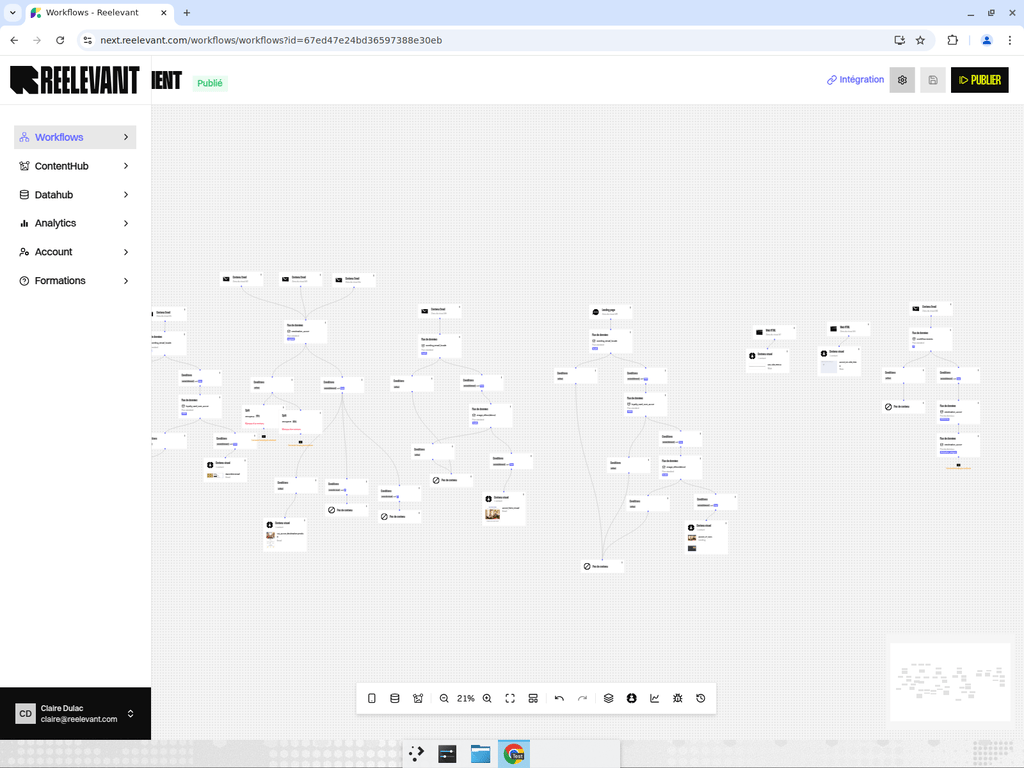
Workflow Listing
When you open the Workflows application from the sidebar, you land on the workflow listing page. This table displays all your workflows with the following columns:
Use the search bar to find workflows by name, and the hierarchy breadcrumbs to navigate through folders.
Creating a New Workflow
1
Open the creation modal
Click the Create button in the top-right corner of the listing page. A modal dialog opens.
2
Fill in the workflow details
The creation form has the following fields:
- Name — A descriptive name for your workflow (e.g., “Summer Sale Email Campaign”).
- Description — An optional description explaining the purpose of the workflow.
- Teams — Select one or more teams that should have access to this workflow. You can search and select multiple teams.
- Folder — Optionally place the workflow within a folder hierarchy for organization.
3
Confirm creation
Click Create to create the workflow. You will be redirected to the workflow editor where you can start building your automation logic.
Editing Workflow Properties
Once a workflow is created, you can update its properties at any time from the editor:- Click the Settings (gear icon) button in the editor header.
- The Edit workflow modal opens with the same fields as the creation form.
- Update the name, description, teams, or folder as needed.
- Click Save to apply changes.
Archiving a Workflow
To archive a workflow that is no longer needed:- Open the workflow’s actions menu (three dots) in the listing table.
- Select Archive.
- A confirmation dialog asks you to type a validation word to confirm the action.
- Once archived, the workflow status changes to Inactive and it stops serving content.