

Overview
Attribution explains how much revenue your Reelevant workflows helped generate. It links each purchase back to the content interactions that led to it. A customer often sees or clicks Reelevant content several times before buying. Attribution shares the credit across those interactions, so you can see the real contribution of your personalisation.Reelevant-influenced revenue
Reelevant reports influenced revenue — the revenue Reelevant helped generate, not a claim to own every sale. This wording is deliberate. A purchase usually involves several marketing efforts, so Reelevant credits its share of the outcome rather than the whole sale.Compare Influenced Revenue and Direct Revenue side by side to see how much value your early interactions add beyond the final one.
Attribution models
An attribution model decides how credit is shared between the interactions that led to a purchase. You choose one model in Analytics Settings.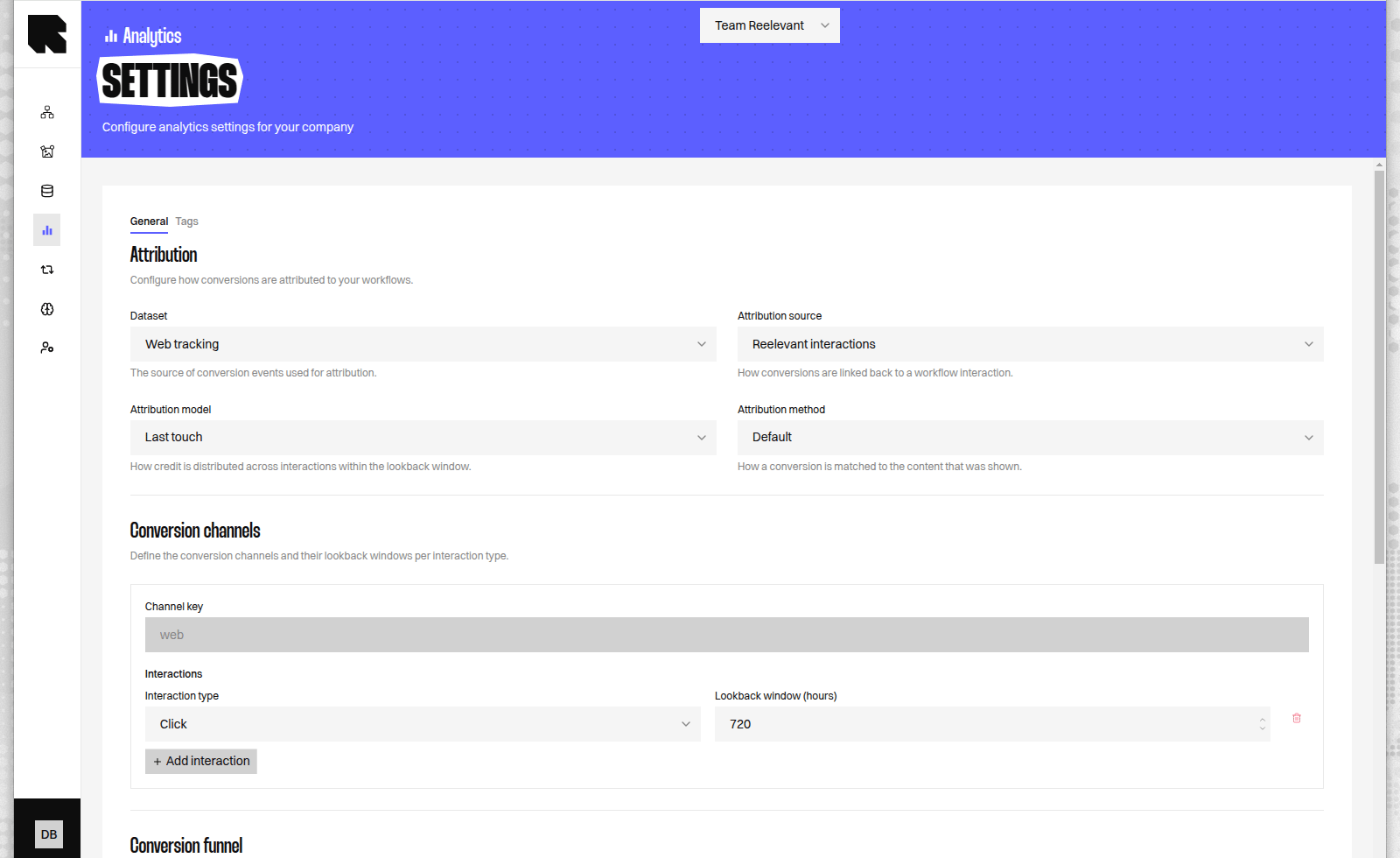
Worked example
Imagine a customer interacts with Reelevant content three times, then buys for 100.The lookback window
The lookback window is the time before a purchase during which an interaction can earn credit. An interaction that happened outside this window is not credited. You can set a different window for each interaction type:
A display view is a weaker signal than a click, so it uses a shorter default window. You can change either window to match how your customers behave.
Where the data comes from
Reelevant can measure attribution from two sources. You pick the one that fits your setup in Analytics Settings.Both sources support click and view-through attribution, so you get the same models and measures whichever one you choose.
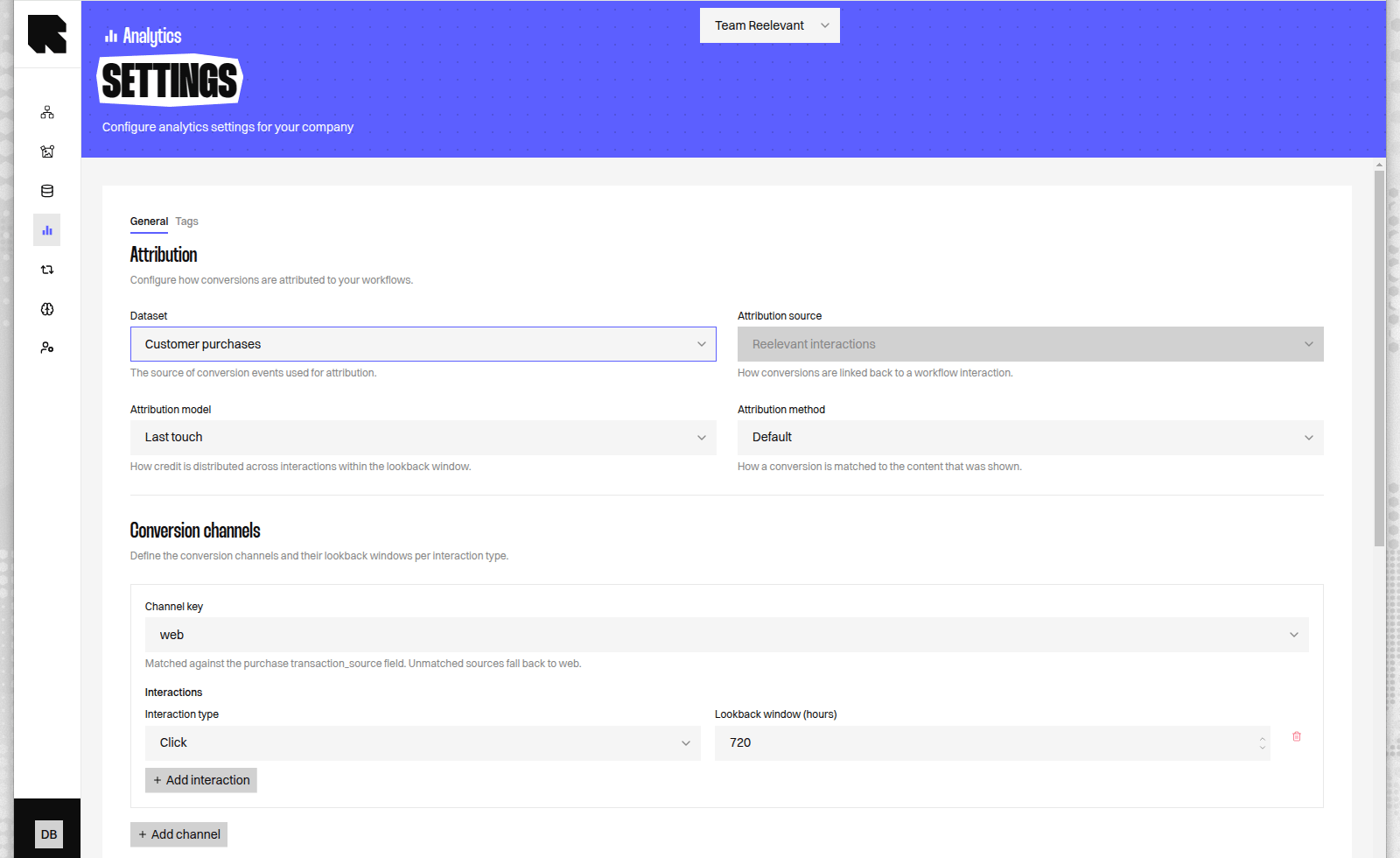
UTM-based attribution
When you use Web tracking, you can attribute conversions across the UTM tags in your landing-page links instead of Reelevant interactions. Each distinct UTM combination before the purchase becomes an interaction and earns a share, using the same models above. This spreads credit across every marketing effort in the customer’s path — for example email, paid search, and social. You choose which UTM tags define an interaction. By default Reelevant groups byutm_source and utm_medium.
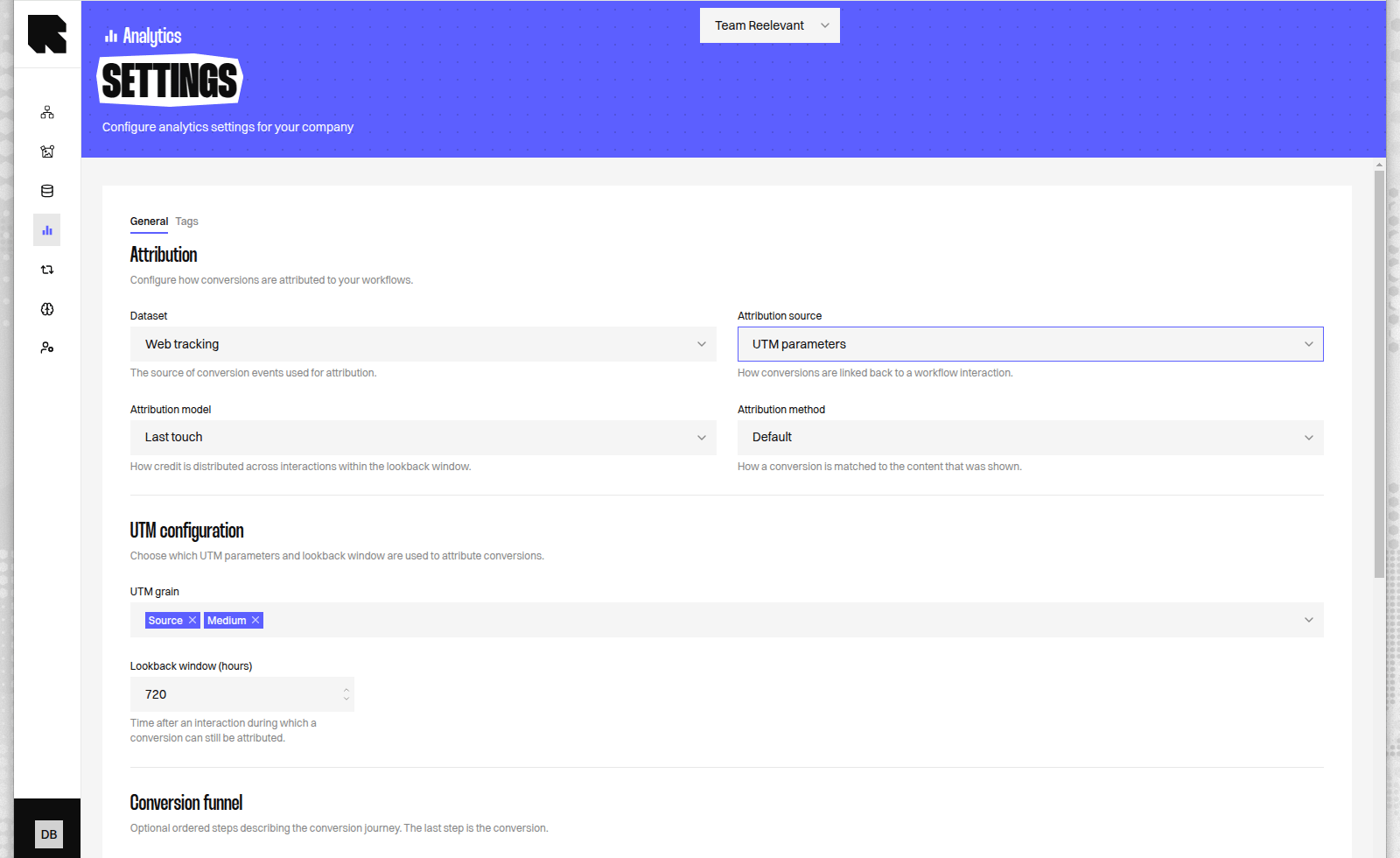
UTM-based attribution is only available with Web tracking, because it reads the UTM tags Reelevant captures from your landing-page links.
Beyond purchases
Attribution is not limited to online shopping. You can define your own stages — for examplesignup_start then signup_complete — and Reelevant credits the last stage as the conversion.
This lets you measure any goal that matters to you, not only sales.
What’s Next?
Analytics Settings
Choose your attribution model, lookback windows, and data source.
Conversions Dashboard
See influenced revenue and conversions from your campaigns.
Measures and Dimensions
Review the measures available for your analysis.