A service account (a dedicated account for an integration) lets an integration connect without using a person’s email address or password.

Create a service account

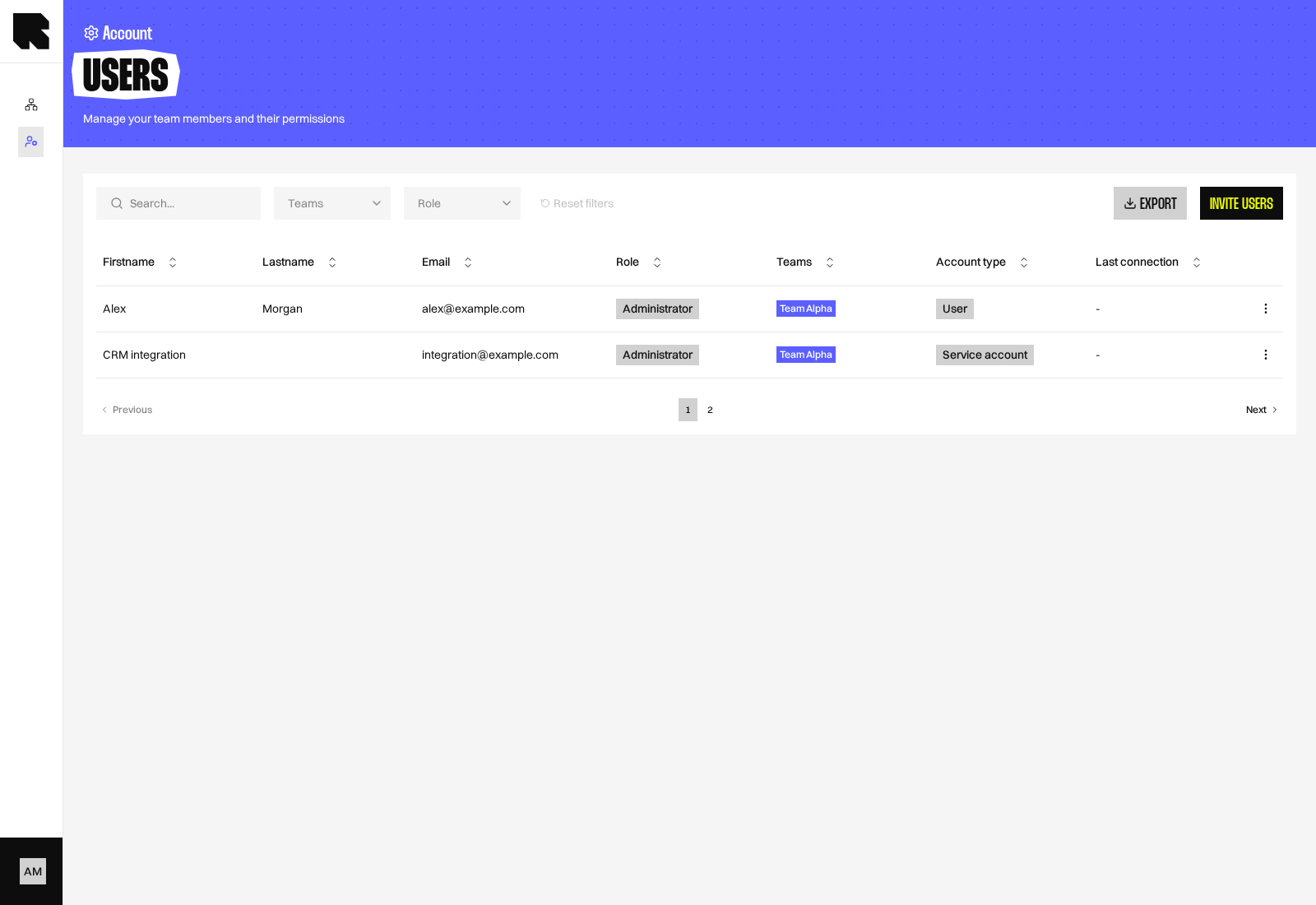
Use a service account when an integration needs its own access. A role and at least one Team control what it can use. Users table showing the Invite users button and a service account row
1

Open the invitation

Go to Account > Users, then select Invite users.
2

Choose the account type

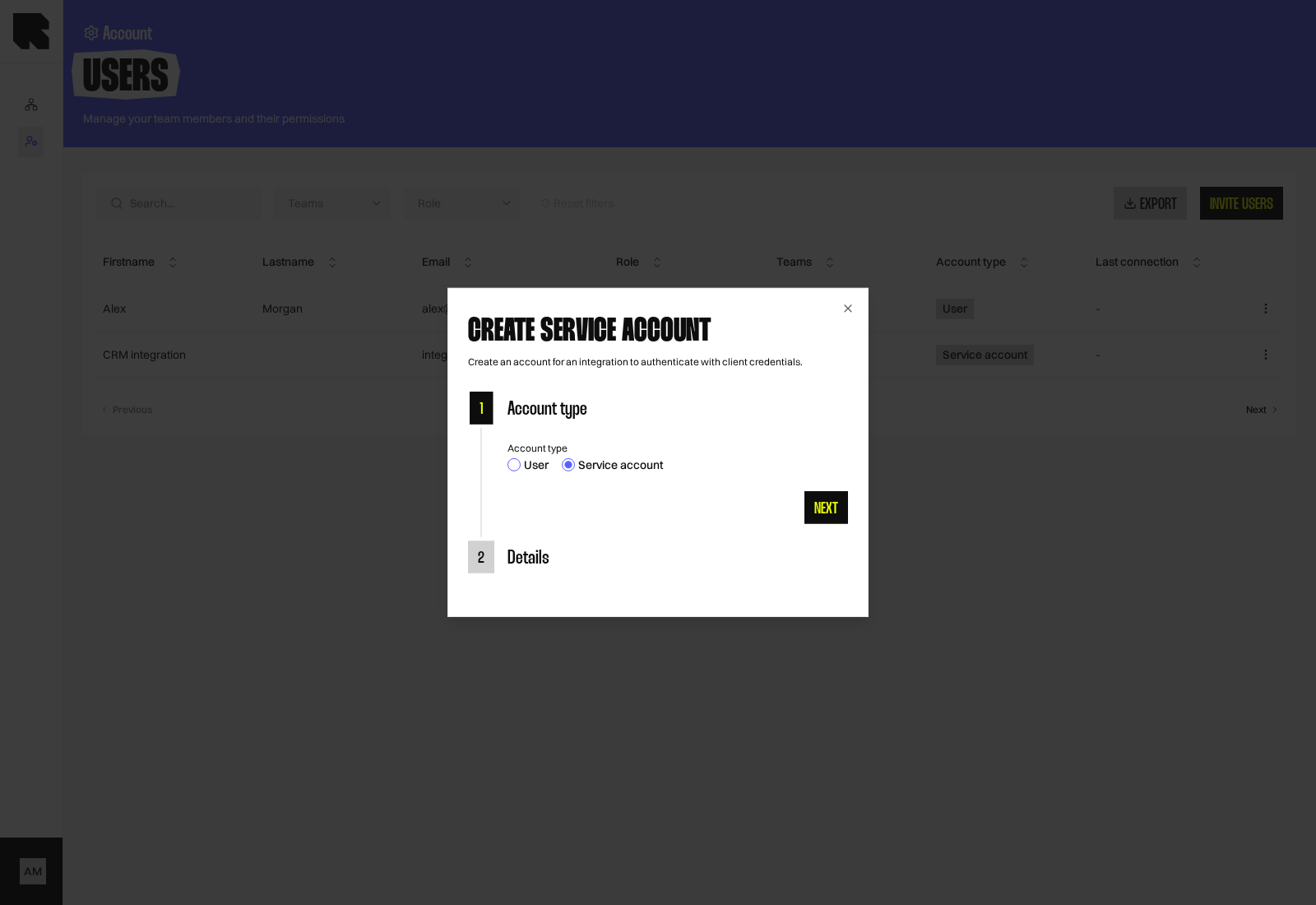
Select Service account in the Account type step.Invitation modal with Service account selected as the account type
3

Enter account details

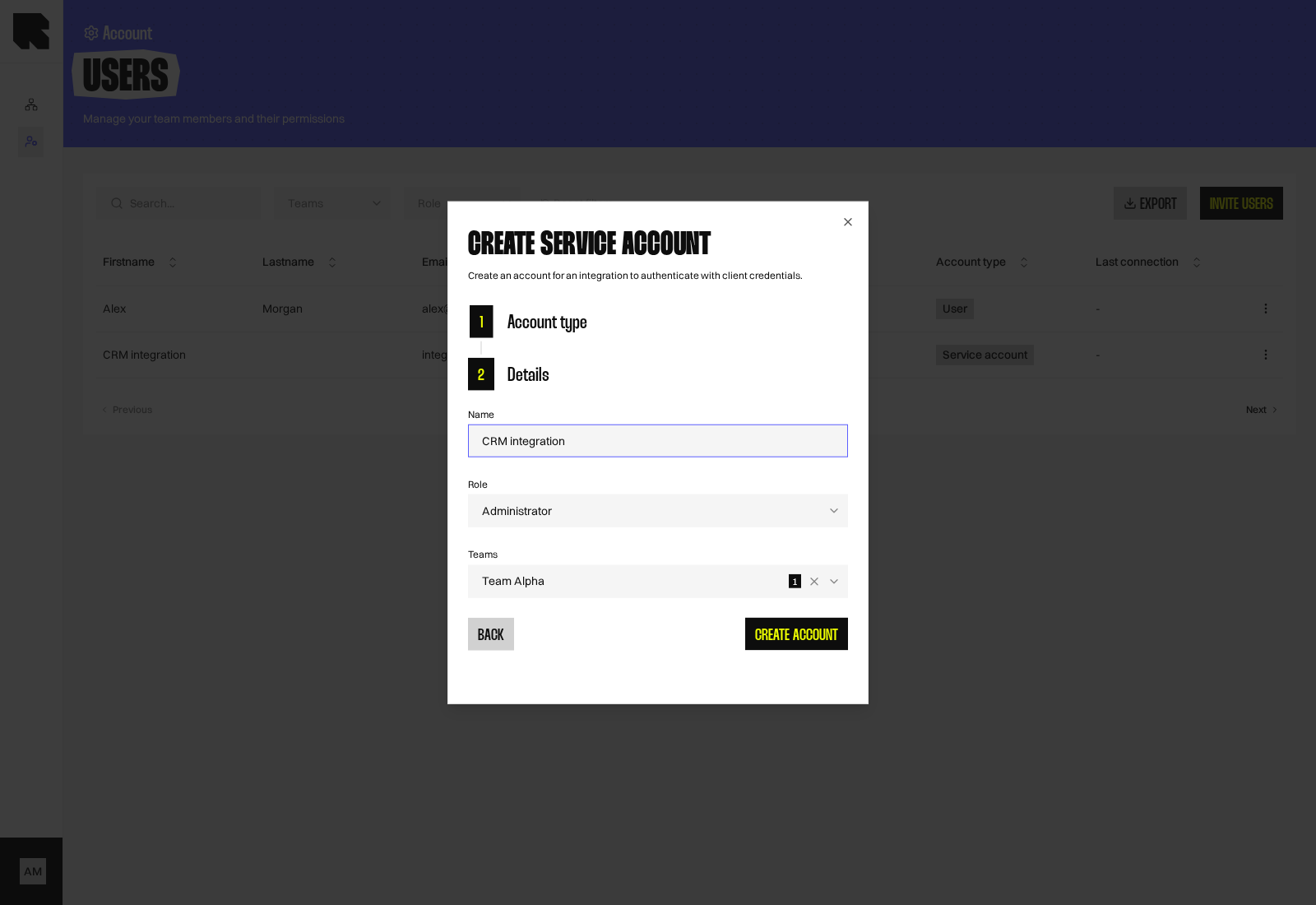
Enter a Name, choose a Role, and select at least one Team. Choose a role that grants only the access the integration needs.Service account details form with Name, Role, and Teams fields
4

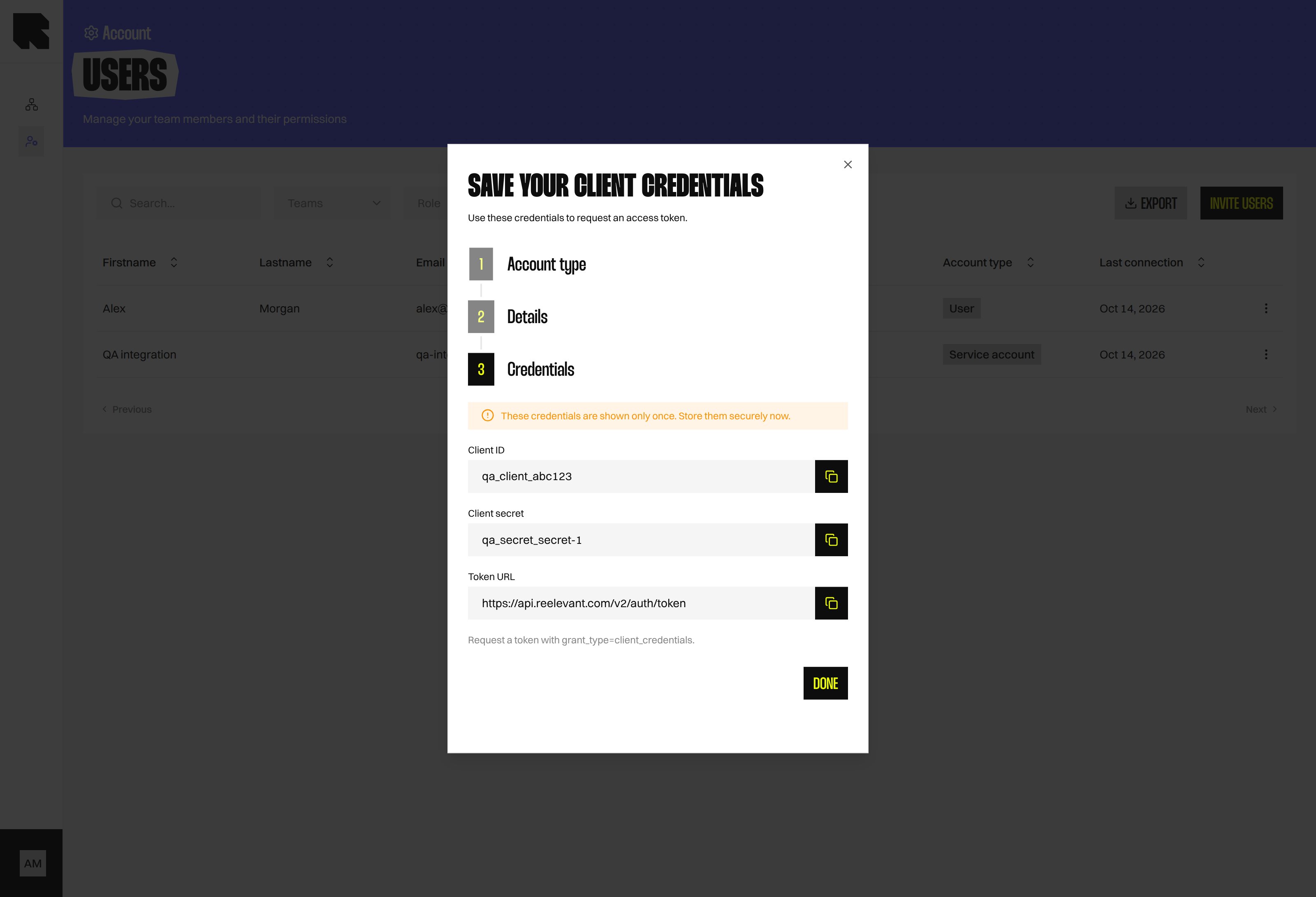
Create the account and save its credentials

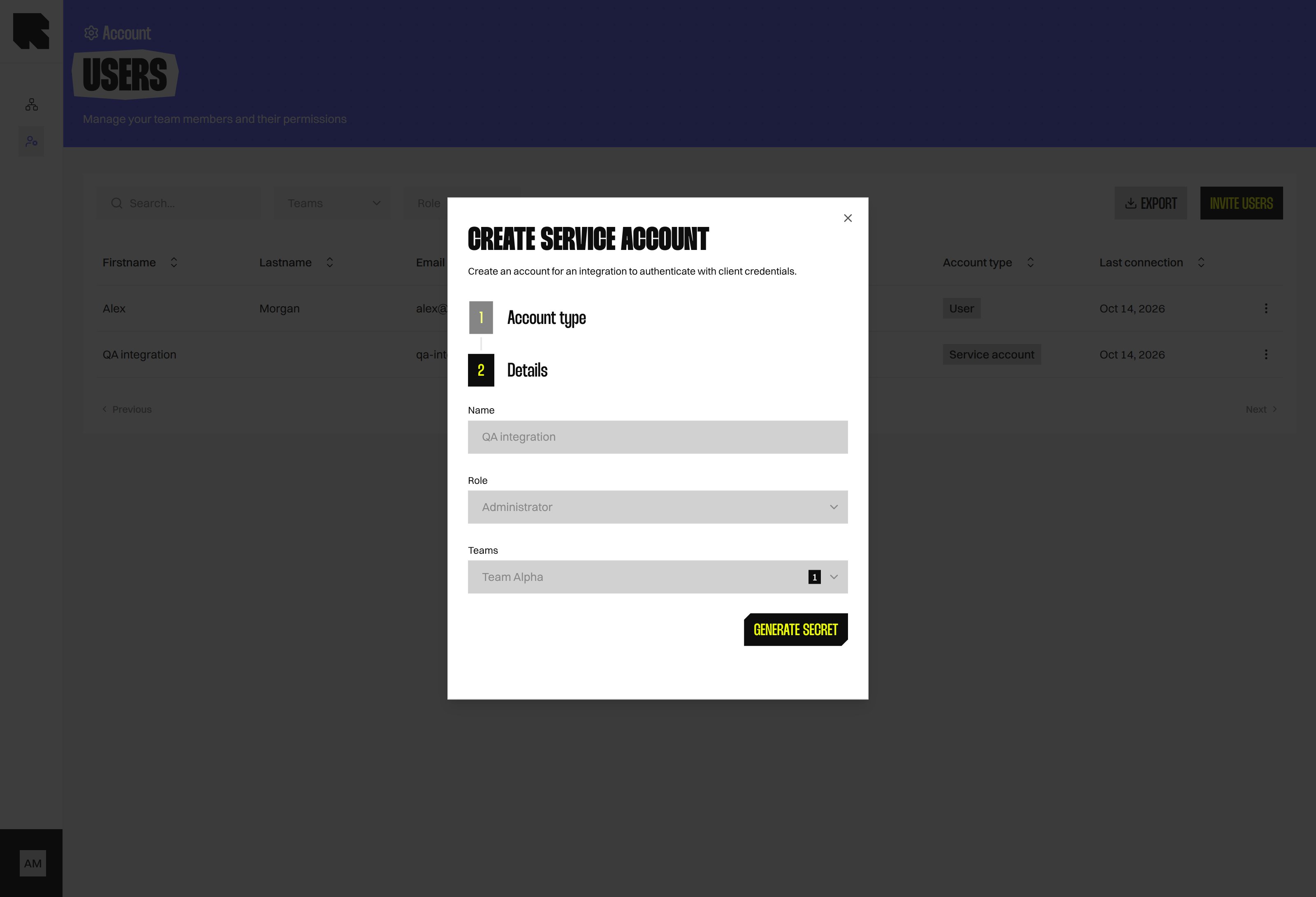
Select Create account. Reelevant creates the account and its first secret automatically.One-time view showing the client ID, client secret, and token URLCopy the credentials before leaving this screen. The Client secret is shown only once; you cannot reveal it later.If the first secret cannot be generated, the account is still created. Generate one later from Manage client secrets.Service account creation screen after secret generation fails, with Generate secret available for retry
Manage client secrets

Select Manage client secrets from the service account row’s actions menu. The drawer shows each secret’s label, status, creation date, and last use. Client secrets drawer showing two active secrets with their revoke actions To add a secret, select Generate secret, enter an optional Label, and select Generate secret again. Copy and store the new credentials when they appear. You can have up to two active secrets. Create a replacement before revoking the current secret.
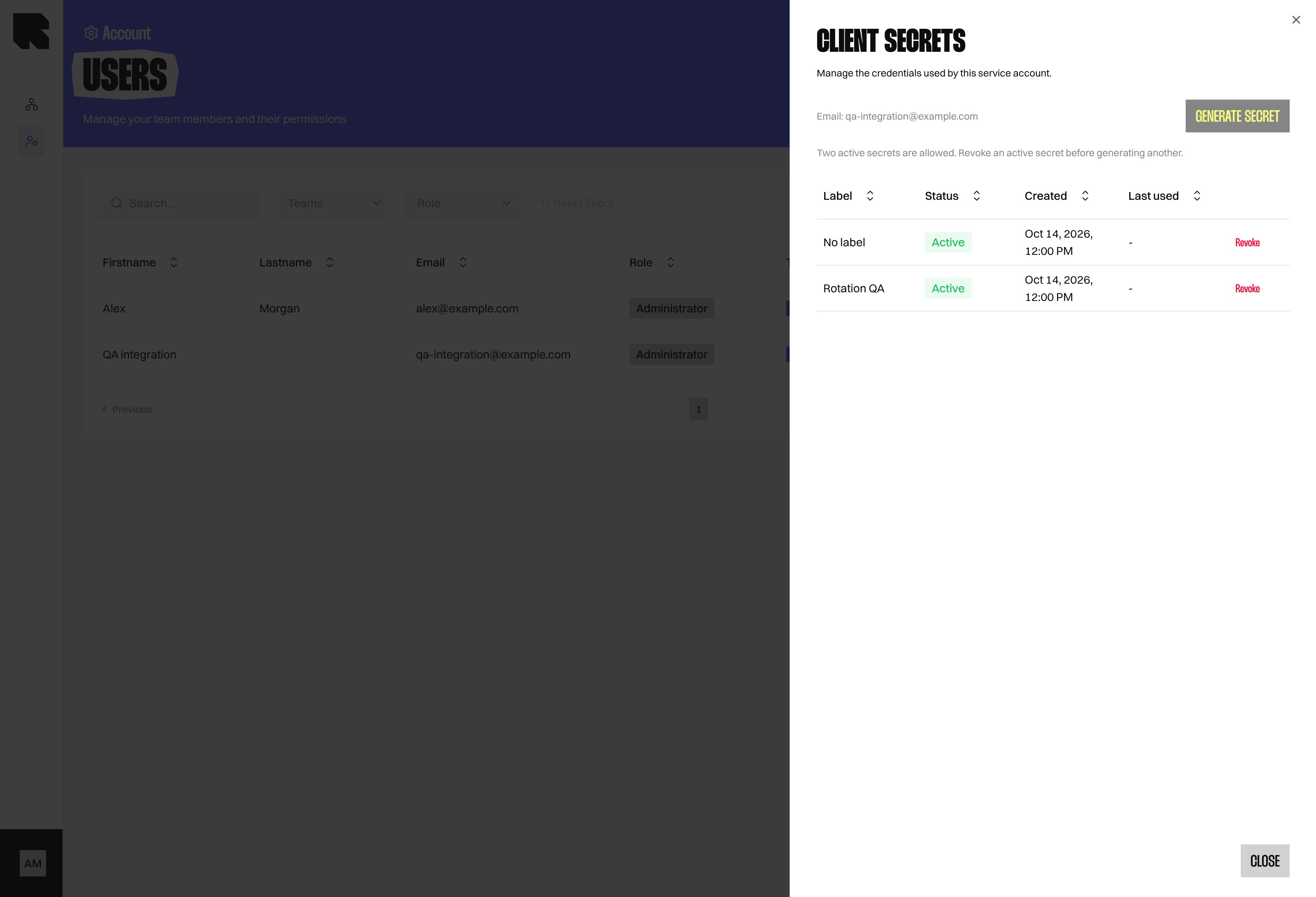
Revoking a client secret immediately stops access tokens issued with it. Update the integration to use another secret before revoking the current one.

What’s Next?

Users

Review user accounts, roles, and Teams.

Roles

Choose which actions a service account can perform.